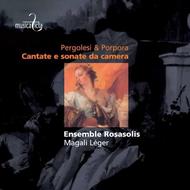
Pergolesi / Porpora - Cantate e sonate da camera
£12.83
Currently out of stock at the UK suppliers. Available to order, but is likely to take longer than usual to despatch
Despatch Information
This despatch estimate is based on information from both our own stock and the UK supplier's stock.
If ordering multiple items, we will aim to send everything together so the longest despatch estimate will apply to the complete order.
If you would rather receive certain items more quickly, please place them on a separate order.
If any unexpected delays occur, we will keep you informed of progress via email and not allow other items on the order to be held up.
If you would prefer to receive everything together regardless of any delay, please let us know via email.
Pre-orders will be despatched as close as possible to the release date.
Label: Musica Ficta
Cat No: MF8012
Format: CD
Number of Discs: 1
Release Date: 13th December 2010
Contents
Works
PergolesiOrfeo “Nel chiuso centro”, Op.2 No.4
Pergolesi
Sinfonia da camera a tre, Op.2 No.2
Pergolesi
Lantananza “Dalsigre ahi! Mia Dalsigre”, Op.2 No.1
Pergolesi
Segreto tormento “Chi non ode e chi non vede”, Op.2 No.3
Porpora
Sinfonia da camera a tre, Op.2 No.3
Artists
Magali Leger (soprano)Ensemble Rosasolis
Works
PergolesiOrfeo “Nel chiuso centro”, Op.2 No.4
Pergolesi
Sinfonia da camera a tre, Op.2 No.2
Pergolesi
Lantananza “Dalsigre ahi! Mia Dalsigre”, Op.2 No.1
Pergolesi
Segreto tormento “Chi non ode e chi non vede”, Op.2 No.3
Porpora
Sinfonia da camera a tre, Op.2 No.3
Artists
Magali Leger (soprano)Ensemble Rosasolis
About
The three cantatas for soprano, strings and basso continuo presented here appear, along with a fourth for alto, in an elegant collection published around 1736. This was a posthumous compilation of works composed during the Neapolitan composer’s all-too-brief career. They all exhibit the new pre-galant manner characteristic of the latest Neapolitan music of the time, while remaining close to the baroque style with their dense harmonic language and expressive melodic lines.
Pergolesi’s extraordinary popularity only a few years after his death coincided with a considerable craze for the Neapolitan school in most of the European courts. From the 1740s, Neapolitan music became the benchmark and model. Nicola Antonio Porpora in all probability played, along with many others, an important role in this growing recognition. His instrumental works, few in number, include some chamber sinfonies.
Error on this page? Let us know here
Need more information on this product? Click here