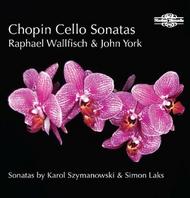
Chopin / Laks / Szymanowski - Cello Sonatas
£13.78
Usually available for despatch within 3-5 working days
Despatch Information
This despatch estimate is based on information from both our own stock and the UK supplier's stock.
If ordering multiple items, we will aim to send everything together so the longest despatch estimate will apply to the complete order.
If you would rather receive certain items more quickly, please place them on a separate order.
If any unexpected delays occur, we will keep you informed of progress via email and not allow other items on the order to be held up.
If you would prefer to receive everything together regardless of any delay, please let us know via email.
Pre-orders will be despatched as close as possible to the release date.
Label: Nimbus
Cat No: NI5862
Format: CD
Number of Discs: 1
Genre: Chamber
Release Date: 24th May 2010
Contents
Works
Cello Sonata in G minor, op.65Etudes (12), op.10
Violin Sonata in D minor, op.9
Artists
Raphael Wallfisch (cello)John York (piano)
Works
Cello Sonata in G minor, op.65Etudes (12), op.10
Violin Sonata in D minor, op.9
Artists
Raphael Wallfisch (cello)John York (piano)
About
And the name of Simon Laks is only just beginning to emerge from oblivion. His cello sonata here receives its first recording. He wrote it in the early 1930s expressly for the great French cellist Maurice Maréchal. The piano part was first played by Vlado Perlemuter in 1932, the partnership a testimony to the composer’s standing in the city. The piece remains to this day in the hand-writing of Laks, uncorrected but very readable.
The 1930s’ musical scene in Paris was dominated by the likes of Ravel, Poulenc and Honegger – and Gershwin - and the influence of each can be glimpsed in the writing. The night-club atmosphere of the central movement is indebted to Ravel’s ‘Blues’ movement in his violin sonata (same key, same smoky sleaziness). Strict sonata form serves Laks well in the first movement, the second subject almost Fauré-esque in its delicious, side-stepping harmony.
Had he not been removed so cruelly from the forefront of music and sent to the concentration camp, who knows what wonderful scores he might have composed later? Instead, he turned to film music and a rather more hum-drum life of obscurity from which, 30 years after his death, he is only now beginning to come to the public’s attention.

Error on this page? Let us know here
Need more information on this product? Click here