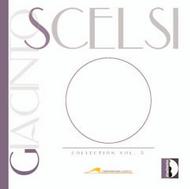
Scelsi Collection Vol.3
£15.15
Currently out of stock at the UK suppliers. Available to order, but is likely to take longer than usual to despatch
Despatch Information
This despatch estimate is based on information from both our own stock and the UK supplier's stock.
If ordering multiple items, we will aim to send everything together so the longest despatch estimate will apply to the complete order.
If you would rather receive certain items more quickly, please place them on a separate order.
If any unexpected delays occur, we will keep you informed of progress via email and not allow other items on the order to be held up.
If you would prefer to receive everything together regardless of any delay, please let us know via email.
Pre-orders will be despatched as close as possible to the release date.
Label: Stradivarius
Cat No: STR33803
Format: CD
Number of Discs: 1
Release Date: 24th August 2009
Contents
Works
ScelsiAion
Scelsi
Hymnos
Scelsi
Four pieces for Orchestra
Scelsi
Ballata
Artists
Francesco Dillon (cello)Ensemble di Percussioni Naqqara (percussion ensemble)
Orchestra Sinfonica Nazionale della RAI
Conductor
Tito CeccheriniWorks
ScelsiAion
Scelsi
Hymnos
Scelsi
Four pieces for Orchestra
Scelsi
Ballata
Artists
Francesco Dillon (cello)Ensemble di Percussioni Naqqara (percussion ensemble)
Orchestra Sinfonica Nazionale della RAI
Conductor
Tito CeccheriniAbout
The Scelsi edition has been devised by the Isabella Scelsi Foundation, working with the Stradivarius Record Company, and is a collection of new, original recordings and significant items recorded in the past. The Scelsi Collection is not intended to be a set of the composer's complete works but a definitive collection enabling a greater understanding and appreciation of Scelsi's music.
Giacinto Scelsi was born into a titled family, studied music in Rome with Giacinto Sallustio, and later studied composition with a pupil of Arnold Schoenberg’s, Walther Klein. Throw into this melting pot the influences of Ottorino Respighi, Alfredo Casella, the surrealists, fauvists and futurists of Paris, and the potential for a rich mixture of styles was always ever present.
The younger Scelsi was a faithful follower of Schoenberg’s serialism, but after a personal crisis at the end of the 1940s he saw music as something of three dimensions: Pitch, duration and depth of tones. Scelsi also changed faith from Catholic to Eastern philosophies, another aspect of his life which would deeply affect his works and lifestyle.
If little is known of Scelsi, then he succeeded in not wishing to become well known. He allowed no photos of himself to appear along with his work and only after his death were a few pictures of the man brought to light.
Error on this page? Let us know here
Need more information on this product? Click here