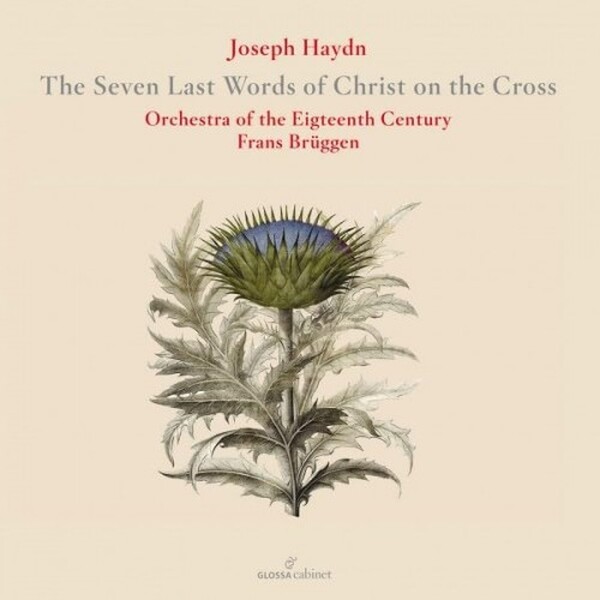
Haydn - The Seven Last Words of Christ on the Cross
£9.45
Usually available for despatch within 5-8 working days
Despatch Information
This despatch estimate is based on information from both our own stock and the UK supplier's stock.
If ordering multiple items, we will aim to send everything together so the longest despatch estimate will apply to the complete order.
If you would rather receive certain items more quickly, please place them on a separate order.
If any unexpected delays occur, we will keep you informed of progress via email and not allow other items on the order to be held up.
If you would prefer to receive everything together regardless of any delay, please let us know via email.
Pre-orders will be despatched as close as possible to the release date.
Label: Glossa
Cat No: GCDC81109
Format: CD
Number of Discs: 1
Genre: Orchestral
Release Date: 12th December 2025
Contents
Artists
Orchestra of the Eighteenth CenturyConductor
Frans BruggenWorks
The Seven Last Words of our Saviour on the Cross, op.51Artists
Orchestra of the Eighteenth CenturyConductor
Frans BruggenAbout
Haydn ‘translated’ Christ’s last words, culled from the various Gospels, into seven slow, sober and imposingly spiritual movements. After Cádiz, the work became removed from its liturgical context. In modern-day programming, attempts have been made to reconstruct the original setting, but in a concert hall, spoken commentary only interferes with the music, and even more so on a recording.
In respecting this objection, but at the same time desiring to create a meaningful space between the movements, Frans Brüggen invited the Dutch-American composer Ron Ford (b. Kansas City, 1959) to compose instrumental intermezzi. ‘This was a real challenge,’ says Ford. ‘I looked for a balance between contrast and creating suitable connections. With this sort of commission, you have to ask yourself: what haven’t we had yet? Haydn is punctual, logical, direct. What is missing is a sense of swell and ebb. I explored that route, with the sound of the Orchestra of the 18th Century in mind. Their breathing style of playing is unique in the world.’
Error on this page? Let us know here
Need more information on this product? Click here