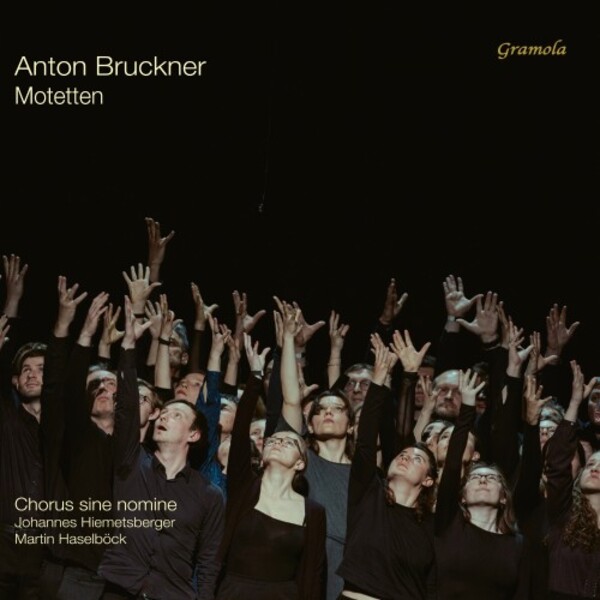
Bruckner - Motets + Organ Improvisations (Vinyl LP)
£29.40
In stock - available for despatch within 1 working day
Despatch Information
This despatch estimate is based on information from both our own stock and the UK supplier's stock.
If ordering multiple items, we will aim to send everything together so the longest despatch estimate will apply to the complete order.
If you would rather receive certain items more quickly, please place them on a separate order.
If any unexpected delays occur, we will keep you informed of progress via email and not allow other items on the order to be held up.
If you would prefer to receive everything together regardless of any delay, please let us know via email.
Pre-orders will be despatched as close as possible to the release date.
Label: Gramola
Cat No: 10005
Format: LP
Number of Discs: 1
Release Date: 4th April 2025
Contents
Works
Ave Maria, WAB6Christus factus est, WAB11
Locus iste, WAB23
Os justi meditabitur, WAB30
Vexilla regis, WAB51
Virga Jesse floruit, WAB52
Improvisations (5)
Artists
Chorus sine nomineMartin Haselbock (organ)
Conductor
Johannes HiemetsbergerWorks
Ave Maria, WAB6Christus factus est, WAB11
Locus iste, WAB23
Os justi meditabitur, WAB30
Vexilla regis, WAB51
Virga Jesse floruit, WAB52
Improvisations (5)
Artists
Chorus sine nomineMartin Haselbock (organ)
Conductor
Johannes HiemetsbergerAbout
Chorus sine nomine, founded in 1991 by Johannes Hiemetsberger, is one of the most distinguished and innovative concert choirs in Austria. On this LP, the choir presents motets by Anton Bruckner. Bruckner simply called them sacred choruses, as the reason for their composition can usually be traced back to a liturgical occasion. The six works on the CD correspond to such liturgical interludes: Graduale (Christus factus est, Locus iste, Os justi, Virga Jesse), Offertorium (Ave Maria) and a hymn for the Good Friday liturgy (Vexilla regis).
As an organist, Bruckner was admired above all for his improvisations. He was particularly admired for his high contrapuntal skills, in which he demonstrated his craftsmanship in fugue and imitation. The style of the fugal parts of his improvisations was based on Baroque patterns (such as Handel), while in other, more imaginative parts the tonal language of his organ playing became increasingly typical of Bruckner. Martin Haselböck establishes this connection to Bruckner with his organ improvisations.
Error on this page? Let us know here
Need more information on this product? Click here