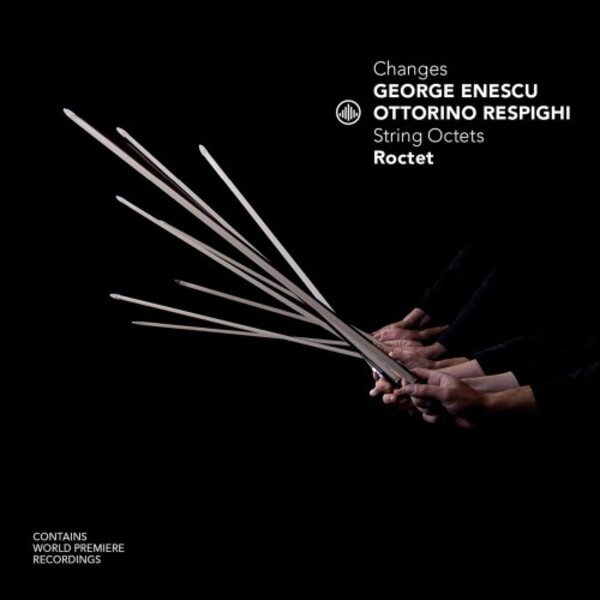
Changes: Enescu, Respighi - String Octets
£14.20
In stock - available for despatch within 1 working day
Despatch Information
This despatch estimate is based on information from both our own stock and the UK supplier's stock.
If ordering multiple items, we will aim to send everything together so the longest despatch estimate will apply to the complete order.
If you would rather receive certain items more quickly, please place them on a separate order.
If any unexpected delays occur, we will keep you informed of progress via email and not allow other items on the order to be held up.
If you would prefer to receive everything together regardless of any delay, please let us know via email.
Pre-orders will be despatched as close as possible to the release date.
Label: Challenge Classics
Cat No: CC720001
Format: CD
Number of Discs: 1
Genre: Chamber
Release Date: 14th March 2025
Contents
Works
Octet for strings in C major, op.7Changes for double quartet
Doppio quartetto in D minor, P27
Artists
RoctetAbout
It is the year 1900: the new century has just started when two young composers independently from each other publish new additions to the string octet literature. The Romanian George Enescu at the tender age of eighteen already has gathered more musical experience than most musicians twice his age.As a composer he sets himself a complex and daunting task: his Octet is in four movements, yet played together they reveal a sonata form (a structure applied to the first movements of some famous symphonies), consisting of an exposition, a development and a recapitulation. The sonata form with its statements and contrasting statements is like a dramatic monologue with arguments and counter-arguments: the young Enescu, with his formal experiment, brings fragments of his Romanian background and Viennese and French musical upbringing together into a unity and thus draws us into his inner world.
In contrast, the twenty-one-year-old Ottorino Respighi rather goes the other way: he becomes the observer, the filmmaker with the dramatic flair of capturing beautiful images in music, just as he would later do with equal conviction in works like Pini di Roma or Feste romane.
Error on this page? Let us know here
Need more information on this product? Click here