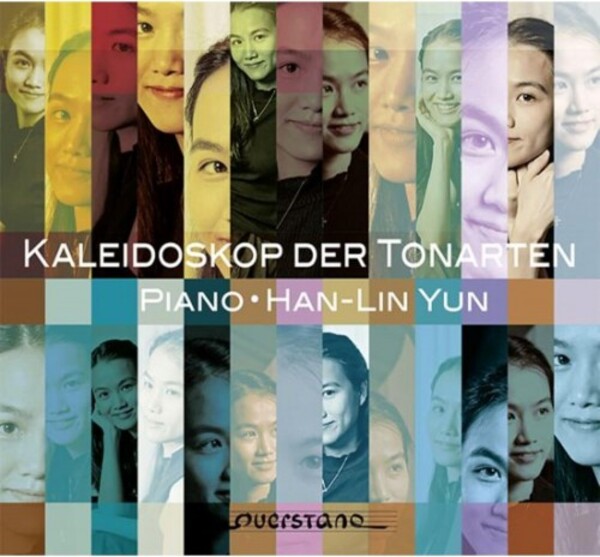
Kaleidoskop der Tonarten (Kaleidiscope of Keys)
£17.05
In stock - available for despatch within 1 working day
Despatch Information
This despatch estimate is based on information from both our own stock and the UK supplier's stock.
If ordering multiple items, we will aim to send everything together so the longest despatch estimate will apply to the complete order.
If you would rather receive certain items more quickly, please place them on a separate order.
If any unexpected delays occur, we will keep you informed of progress via email and not allow other items on the order to be held up.
If you would prefer to receive everything together regardless of any delay, please let us know via email.
Pre-orders will be despatched as close as possible to the release date.
Label: Querstand
Cat No: VKJK2309
Format: CD
Number of Discs: 1
Genre: Instrumental
Release Date: 10th January 2025
Contents
Works
Solfeggio in C minor, Wq117/2 H220French Suites (6), BWV812-817
Songs without Words (Lieder ohne Worte): Book 6, op.67
Keyboard Sonata in D minor, K213
Impromptus (4), op.90 D899
Artists
Han-Lin Yun (piano)Works
Solfeggio in C minor, Wq117/2 H220French Suites (6), BWV812-817
Songs without Words (Lieder ohne Worte): Book 6, op.67
Keyboard Sonata in D minor, K213
Impromptus (4), op.90 D899
Artists
Han-Lin Yun (piano)About
It was and is always the keys that we as listeners pay particular attention to when examining tonal works: We follow the modulation in a composition, we compare the different works of one and the same composer, we look at when and where he uses which key (or "colour") for his work or a certain passage. Slowly and surely our senses grasp the threads that lead us to the mood of the composer. Depending on the key, we sense cheerfulness or gloom, heavenly exultation or loneliness, sadness or transfiguration and recognize that these moods call for a very specific key.
On her first solo CD, Han-Lin Yun has brought together 26 exemplary works that, in her opinion, clearly represent the mood of the respective key. She has added two of the keys that are to be considered separately as enharmonic confusions to the 24 keys: F sharp major (keys that are the same as G flat major) and D sharp minor (keys that are the same as E flat minor).
The text also contains the pianist's own, very personal interpretation, including her perception of colour and the backdrop against which this has a very special effect. The listener can, no, must decide for himself whether or where he agrees and where he wants to follow his own, different perception. Does the mood that an intermezzo, a song, a prelude, an etude puts him in correspond with the pianist's explanations? What is going on inside him? What colour, what background does he see? A truly melodious and atmospheric, perhaps even intoxicating adventure!
Error on this page? Let us know here
Need more information on this product? Click here