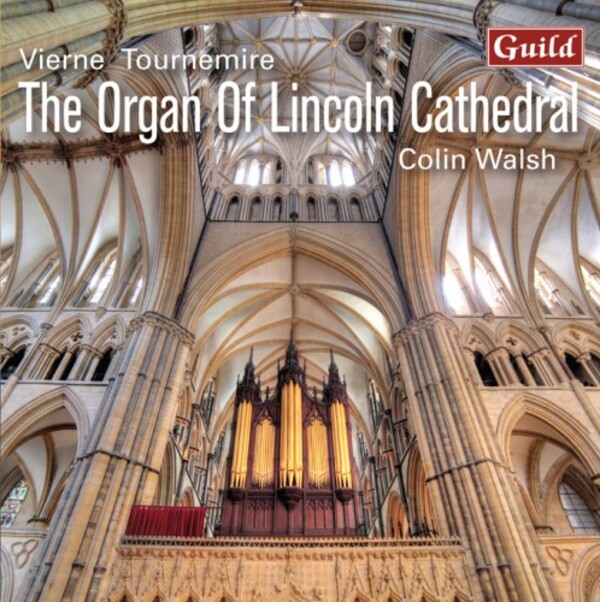
The Organ of Lincoln Cathedral: Vierne, Tournemire
£13.78
Currently out of stock at the UK suppliers. Available to order, but is likely to take longer than usual to despatch
Despatch Information
This despatch estimate is based on information from both our own stock and the UK supplier's stock.
If ordering multiple items, we will aim to send everything together so the longest despatch estimate will apply to the complete order.
If you would rather receive certain items more quickly, please place them on a separate order.
If any unexpected delays occur, we will keep you informed of progress via email and not allow other items on the order to be held up.
If you would prefer to receive everything together regardless of any delay, please let us know via email.
Pre-orders will be despatched as close as possible to the release date.
Label: Guild
Cat No: GMCD7833
Format: CD
Number of Discs: 1
Genre: Instrumental
Release Date: 4th October 2024
Contents
Artists
Colin Walsh (organ)About
However, all proceeded well at St-Sulpice, where Vierne wrote a Mass in C sharp minor and his First Symphony. Dedicated to Alexandre Guilmant and cast unusually in six movements (all his other symphonies have five), the First Symphony begins with a brooding “Prélude”, very much in the spirit of Franck from the nature of its opening theme via the two presentations of a repeated phrase over changing harmonies to the quiet ending. Next comes a “Fugue” (Vierne’s only published one) followed by a “Pastorale” which begins (as will others of his slow movements) with a pedal solo. A lively “Scherzo” then takes us to a dreamy “Andante”. Widor, with his great sense of occasion, must have been especially pleased with the “Final”, a noble peroration in the French manner with quieter episodes just made for the St-Sulpice récit at the very top of the organ case and, capping it all, the expected confident tune in the pedal.
Tournemire stated that Franck’s improvisations had been lost forever, to be gathered up by the angels. Some of his own were fortunately gathered up by the Polydor record company in two sessions, one in April 1930 and the other late in the following year. To avoid traffic noise the recording session took place at night, the team narrowly escaping arrest by a passing policeman who thought they were breaking into the church. In fact they were involved in the laborious business of bringing the recording gear into the church and then getting it up to organ level as the discs had to be close-miked; at Ste-Clotilde this took one practically into the roof. A quarter of a century later Tournemire’s pupil and one-time assistant Maurice Duruflé performed the exacting task of transcribing these records, having to play passages several times, or at slower speeds, to unearth every facet of his master’s voice. Duruflé was certainly familiar with Tournemire’s style, and just as familiar with his behaviour at the console when improvising.
Error on this page? Let us know here
Need more information on this product? Click here