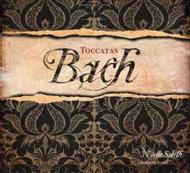
J S Bach - Toccatas
£14.73
Usually available for despatch within 3-5 working days
Despatch Information
This despatch estimate is based on information from both our own stock and the UK supplier's stock.
If ordering multiple items, we will aim to send everything together so the longest despatch estimate will apply to the complete order.
If you would rather receive certain items more quickly, please place them on a separate order.
If any unexpected delays occur, we will keep you informed of progress via email and not allow other items on the order to be held up.
If you would prefer to receive everything together regardless of any delay, please let us know via email.
Pre-orders will be despatched as close as possible to the release date.
Label: Eloquentia
Cat No: EL1234
Format: CD
Number of Discs: 1
Genre: Instrumental
Release Date: 2nd July 2012
Contents
Works
Toccata in C minor, BWV911Toccata in D major, BWV912
Toccata in D minor, BWV913
Toccata in E minor, BWV914
Toccata in F sharp minor, BWV910
Toccata in G major, BWV916
Toccata in G minor, BWV915
Artists
Noelle Spieth (harpsichord)About
The Toccata first originated in the Gregorian chant heard in the Cathedral of St Peter's in Rome. It now functioned as a link between diverse cultural practices. During the Baroque era it was transplanted to the northern European countries, including England, where it made a decisive contribution to the development of secular keyboard music.
These pieces, intended as much for the organ as for the harpsichord, combine the spectacular features of the northern virtuoso style with the rigour associated with the music of the Catholic church. When adopted by musicians from the Lutheran countries during the 17th century, it found yet another form of expression. Through its alternation between dramatic, religious passages and philosophical reflection, the Germanic Toccata provided a new sound model for a community in search of an ideal form of expression, allowing the individual to communicate with his Creator.
The impersonal phrasing of certain musical figures may be thought to express the speculative nature of Calvinism in Flanders, as in the interior scenes of Vermeer. The domestic musical tradition of this region was well known to Bach, in central Germany, through the music printed in Amsterdam, the new capital of music publishing. It was through this route that Frescobaldi's work became known in the north, in particular his Fiori musicali, a famous collection of keyboard pieces in the Roman Catholic style, which made such an impression on Bach that he copied them out by hand.
Error on this page? Let us know here
Need more information on this product? Click here