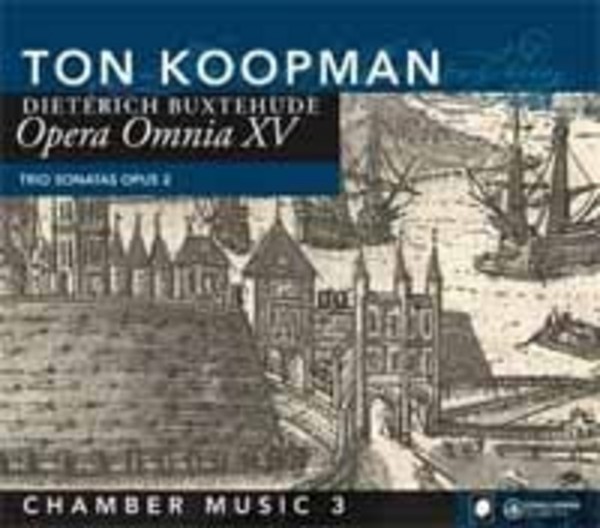
Buxtehude - Chamber Music Vol.3: Trio Sonatas Op.2
£14.20
In stock - available for despatch within 1 working day
Despatch Information
This despatch estimate is based on information from both our own stock and the UK supplier's stock.
If ordering multiple items, we will aim to send everything together so the longest despatch estimate will apply to the complete order.
If you would rather receive certain items more quickly, please place them on a separate order.
If any unexpected delays occur, we will keep you informed of progress via email and not allow other items on the order to be held up.
If you would prefer to receive everything together regardless of any delay, please let us know via email.
Pre-orders will be despatched as close as possible to the release date.
Label: Challenge Classics
Cat No: CC72254
Format: CD
Number of Discs: 1
Genre: Chamber
Release Date: 23rd April 2012
Contents
Artists
Ton Koopman (harpsichord, organ)Catherine Manson (violin)
Paolo Pandolfo (viola da gamba)
Mike Fentross (lute)
Works
Trio Sonatas (7), op.2, BuxWV259-265Artists
Ton Koopman (harpsichord, organ)Catherine Manson (violin)
Paolo Pandolfo (viola da gamba)
Mike Fentross (lute)
About
Ton Koopman is one of the world’s foremost early music specialists and directors. His recordings of the complete Bach Cantatas on Challenge Classics received worldwide acclaim. In recent years he has undertaken the daunting task of recording all of the music of his compatriot, the early baroque composer Dieterich Buxtehude. As president of the International Dieterich Buxtehude Society, Ton Koopman is considered to be one of the world’s leading authorities on his music, and amongst a string of accolades for previous recordings in the series, Opera Omnia X (CC72249) was a Gramophone ‘Editor’s Choice’.
Within a period of two years during the last decade of the 17th century, the Dutch composer Dieterich Buxtehude published a group of fourteen instrumental chamber sonatas in two sets of seven. The trio sonata had originated in Italy after the middle of the century, but the compositional ideas pursued by Buxtehude are based on the concept of the so-called “stylus fantasticus” which was favoured in keyboard and instrumental ensemble music in North Germany at that time.
Error on this page? Let us know here
Need more information on this product? Click here