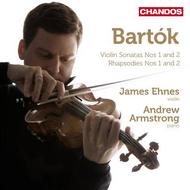
Bartok - Violin Sonatas, Rhapsodies
£15.15 £12.88
save £2.27 (15%)
special offer ending 01/01/2026
In stock - available for despatch within 1 working day
Despatch Information
This despatch estimate is based on information from both our own stock and the UK supplier's stock.
If ordering multiple items, we will aim to send everything together so the longest despatch estimate will apply to the complete order.
If you would rather receive certain items more quickly, please place them on a separate order.
If any unexpected delays occur, we will keep you informed of progress via email and not allow other items on the order to be held up.
If you would prefer to receive everything together regardless of any delay, please let us know via email.
Pre-orders will be despatched as close as possible to the release date.
Label: Chandos
Cat No: CHAN10705
Format: CD
Number of Discs: 1
Release Date: 3rd January 2012
Contents
Works
Andante in A major, BB26bRhapsody no.1 for violin and piano, BB94a
Rhapsody no.2 for violin and piano, BB96a
Violin Sonata no.1, Sz75 BB84, op.21
Violin Sonata no.2, Sz76 BB85
Artists
James Ehnes (violin)Andrew Armstrong (piano)
Works
Andante in A major, BB26bRhapsody no.1 for violin and piano, BB94a
Rhapsody no.2 for violin and piano, BB96a
Violin Sonata no.1, Sz75 BB84, op.21
Violin Sonata no.2, Sz76 BB85
Artists
James Ehnes (violin)Andrew Armstrong (piano)
About
Dedicated to the Hungarian violinist Adila d’Arányi, the sonatas for violin and piano were composed in 1921–22, around the same time as the highly successful ballet score The Miraculous Mandarin. Of the two works, the Sonata in C sharp minor is the more traditional in terms of its structure, and characterised by a mood that is sometimes exhilarated, sometimes turbulent – but always virtuosic. The finale builds from a series of increasingly wild dances, folk-like in style but entirely expressionistic.
In the Sonata in C major, Bartók removes himself from classical form and traditional tonal practice, calling on the violinist to distance himself from the romantic manner of playing. At several points, for example, the violin is played without vibrato, producing an ethereally cool and distant sound. The improvisatory character is strong throughout, as the work repeatedly alternates between the quiet and thoughtful, and the stormy and strident. The ending, in contrast to the earlier sonata, is understated, emotional and expressive.
Bartók’s two Rhapsodies for piano and violin, dedicated respectively to Joseph Szigeti and Zoltán Székely, are steeped in the tradition of Hungarian folk music. Exuberant and infectious, the works are heavily inspired by the csárdás, the national dance of Hungary, and display the traditional pairing of lassú (slow) and friss (lively) movements.
Error on this page? Let us know here
Need more information on this product? Click here